Underwriting, deal scoring, comps, market signals, and risk modeling — in one terminal. Replace six tools and a stack of spreadsheets with the rigor of a Bloomberg seat.
The data serious investors need is scattered across six platforms — none of which talk to each other. By the time the spreadsheet is done, the deal is gone or the numbers can't be trusted.
Manual research across MLS, county records, rent comps, crime data, and permits before you can form a confident view. The clock is your enemy.
The signals that drive returns — vacancy trends, supply pipelines, demand absorption — only matter at the ZIP level. They're nowhere accessible.
Zero margin-of-safety modeling. Portfolios live in stale spreadsheets with no live market context. One rate-cycle turn and you're flat-footed.
Everything an institutional buyer uses — daily feed, scoring, comps, risk, safety, permits — structured for the operator doing it themselves.
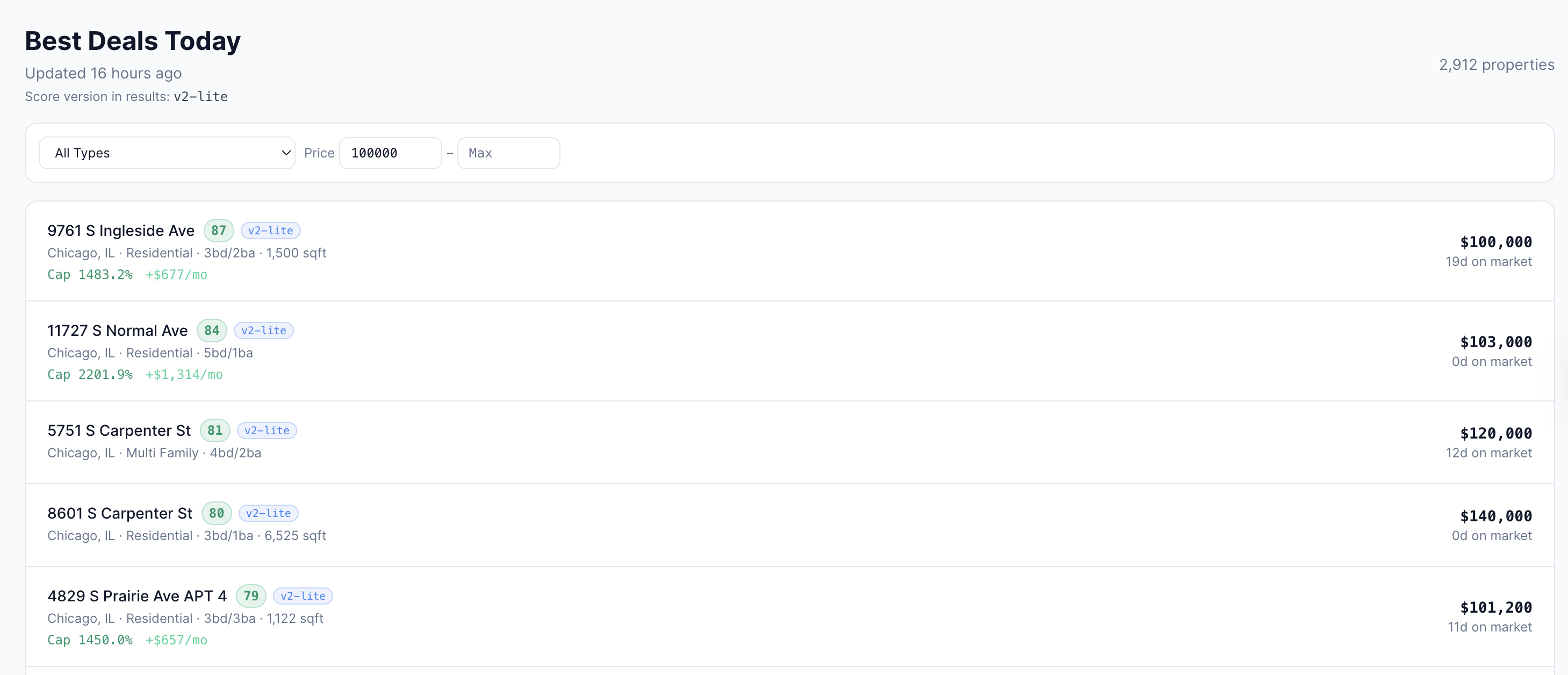
Every property on the market, scored by Atlas v2, ranked highest first. Filter by price, status, type, strategy fit. Start each week with the ten addresses that actually warrant underwriting — not the four hundred you'd have to read through manually.
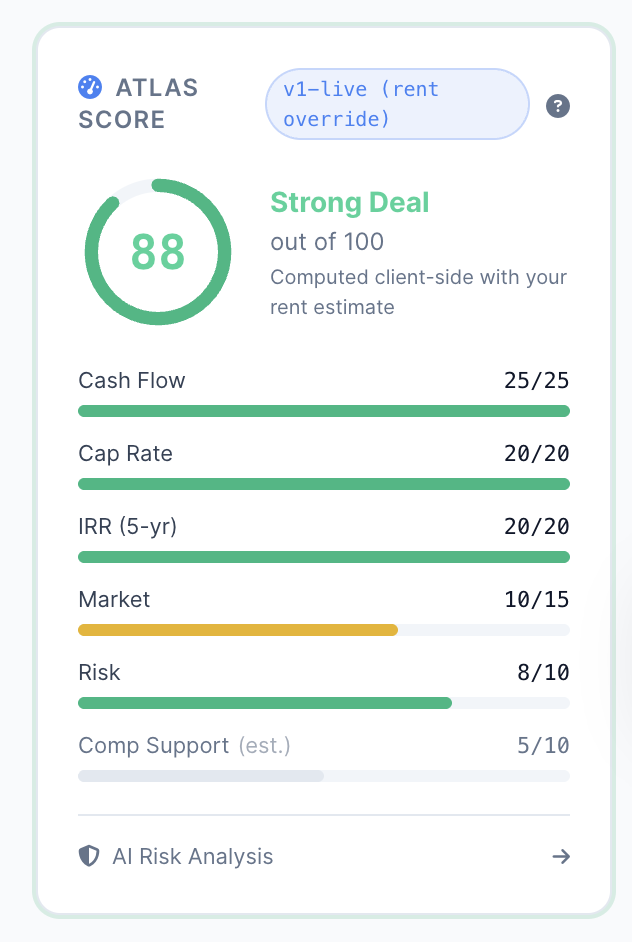
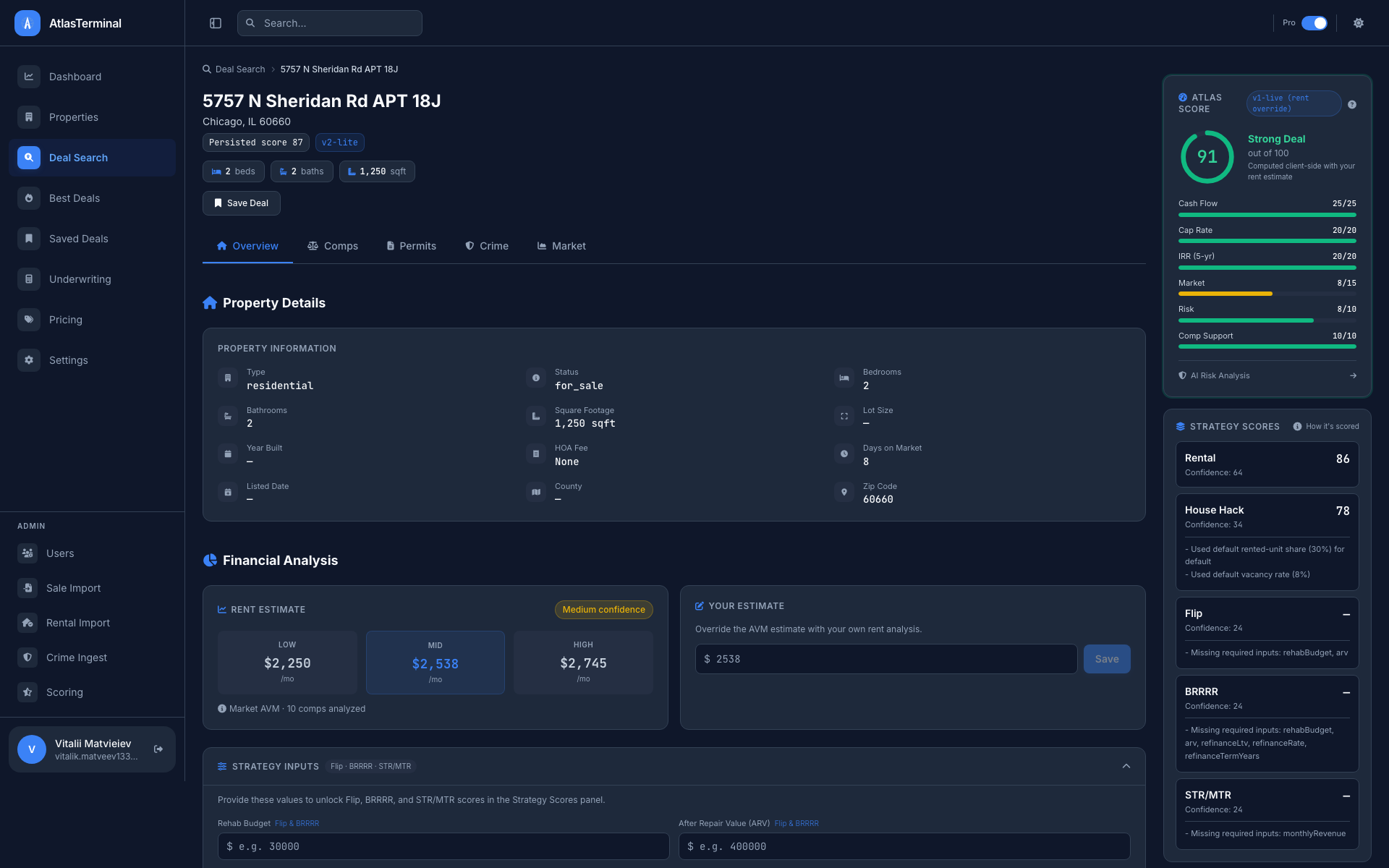
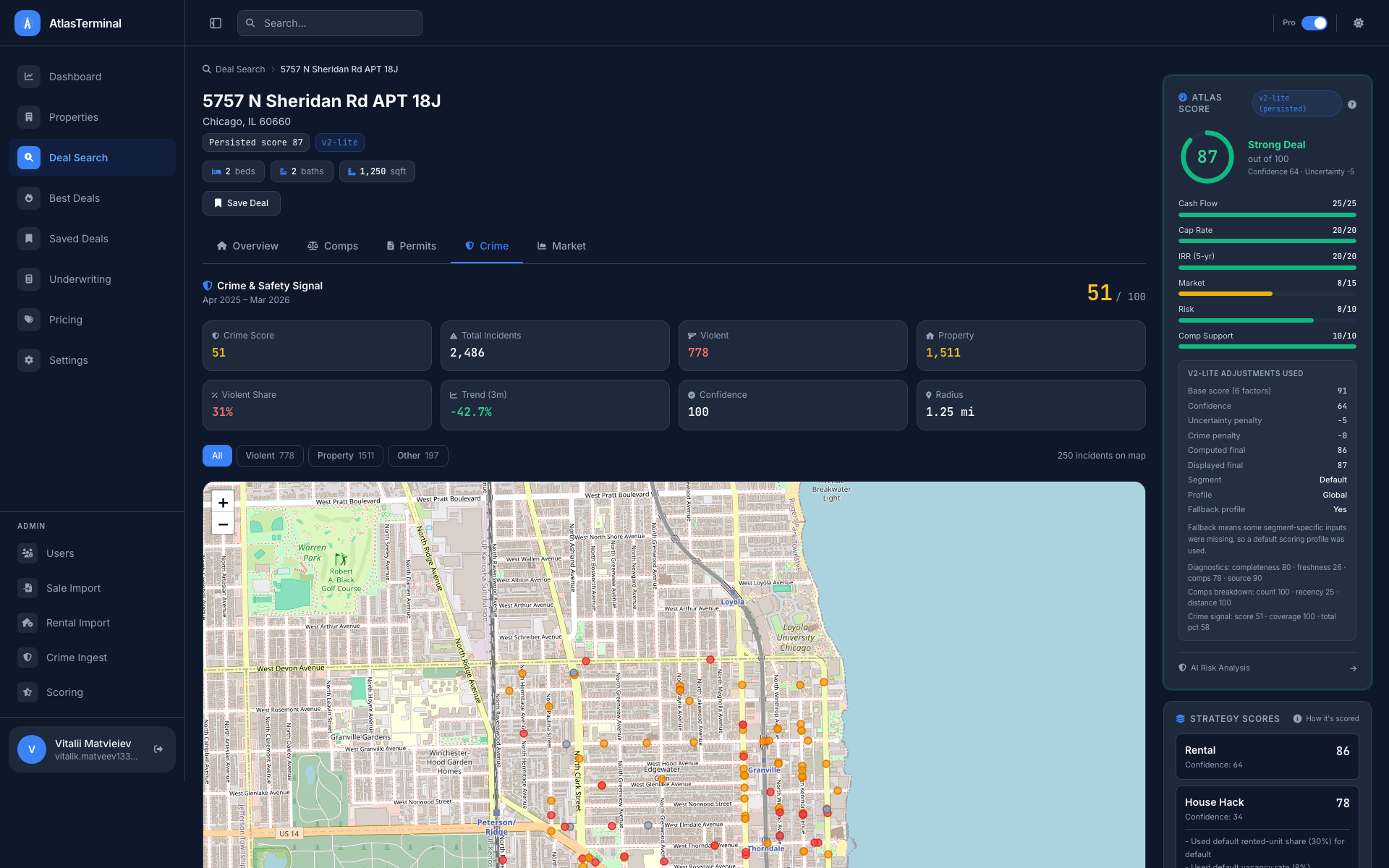
Score 0–100 with full transparency on the inputs. Cash flow, cap rate, IRR, market dynamics, and risk all visible — no black box. See the confidence interval, the segment profile, and the strategy-specific scores before you write an offer.
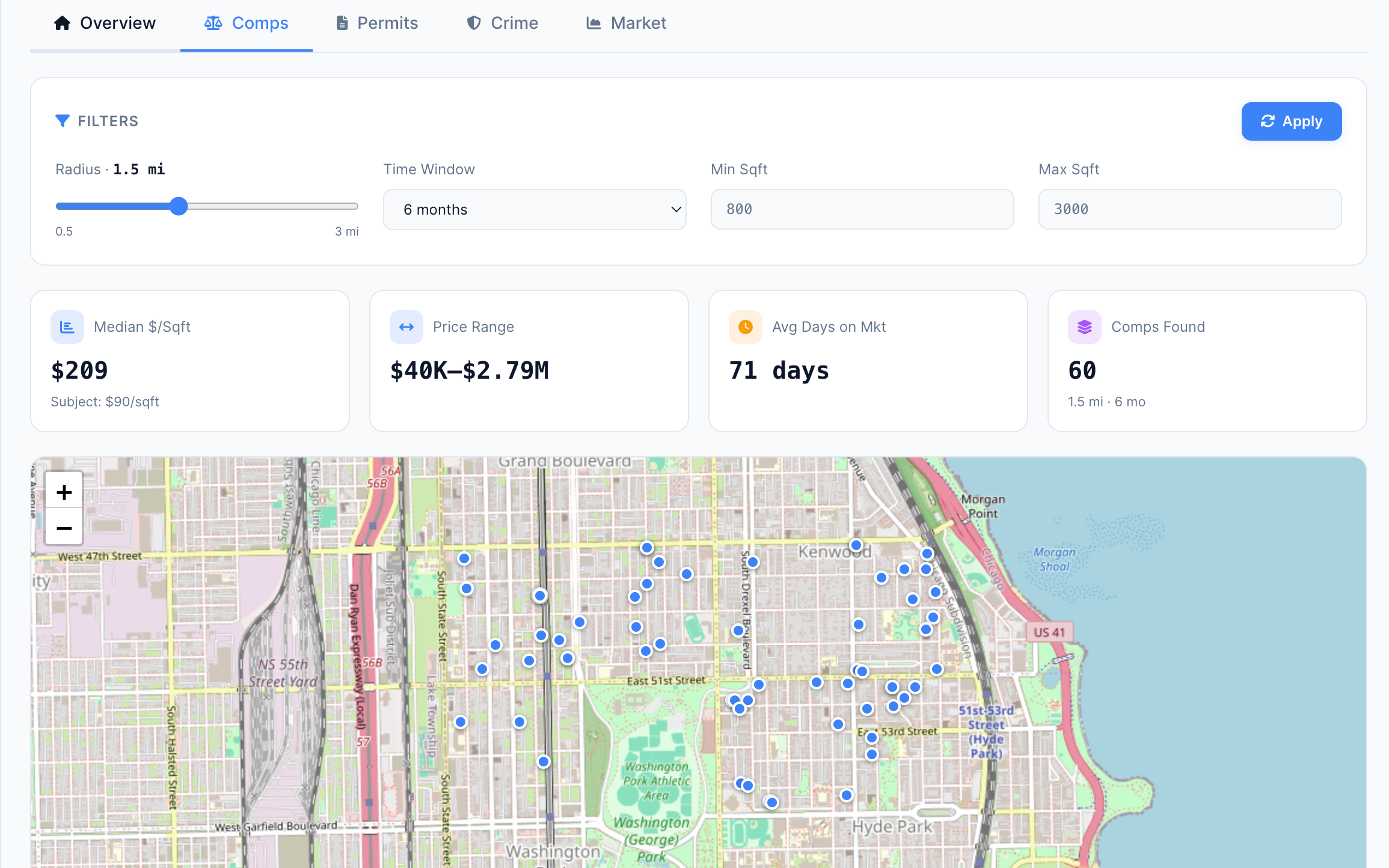
Sale and rent comps within a configurable radius and time window. Match scoring built in. The work an analyst would spend half a day on — pre-computed, with every comp on the map and in the table.
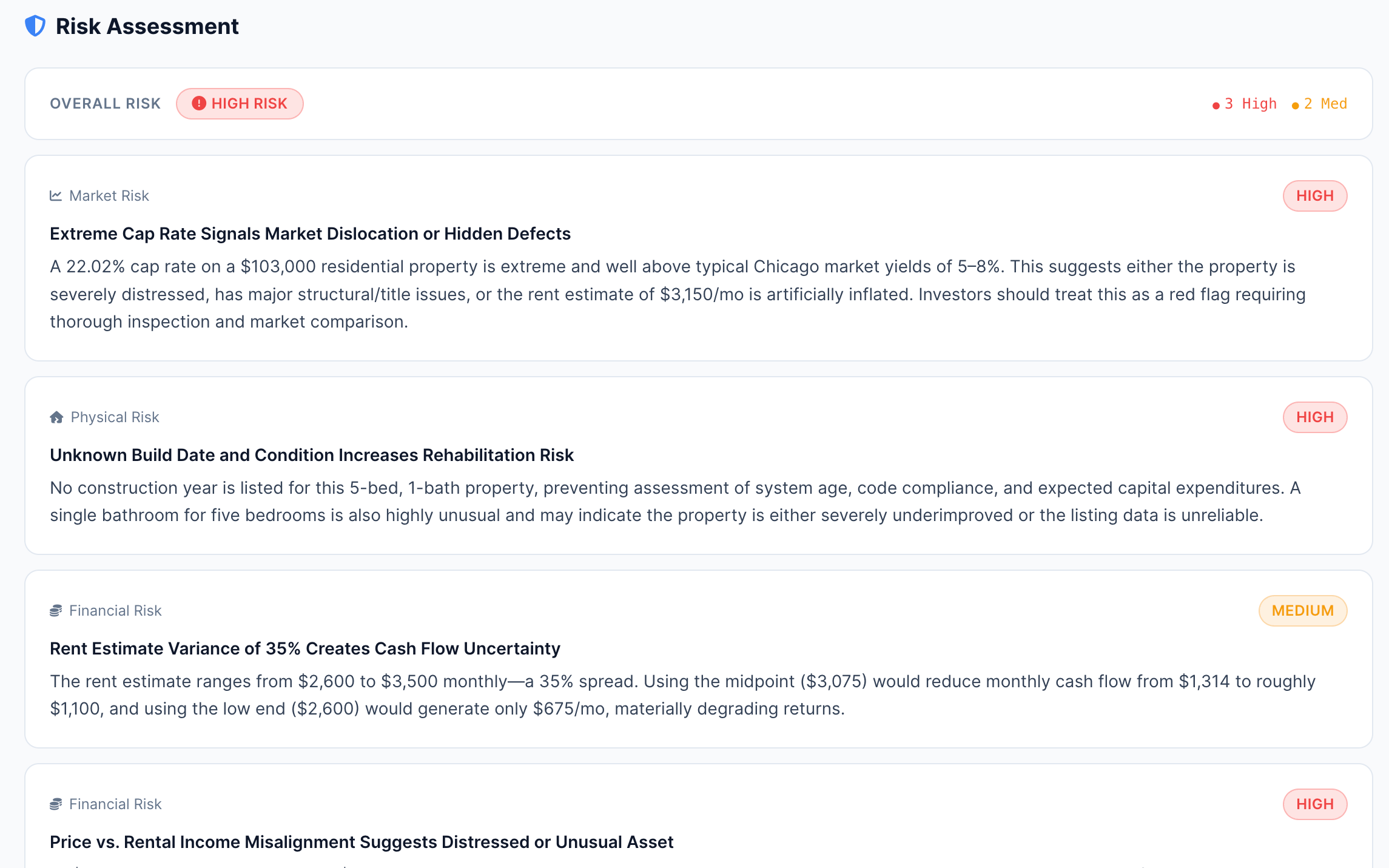
Atlas reads the data and writes you the memo. Categorized risk flags — Market, Physical, Financial — each with the specific evidence and a severity rating. The questions a careful analyst would only think to ask on day three, generated for every address.
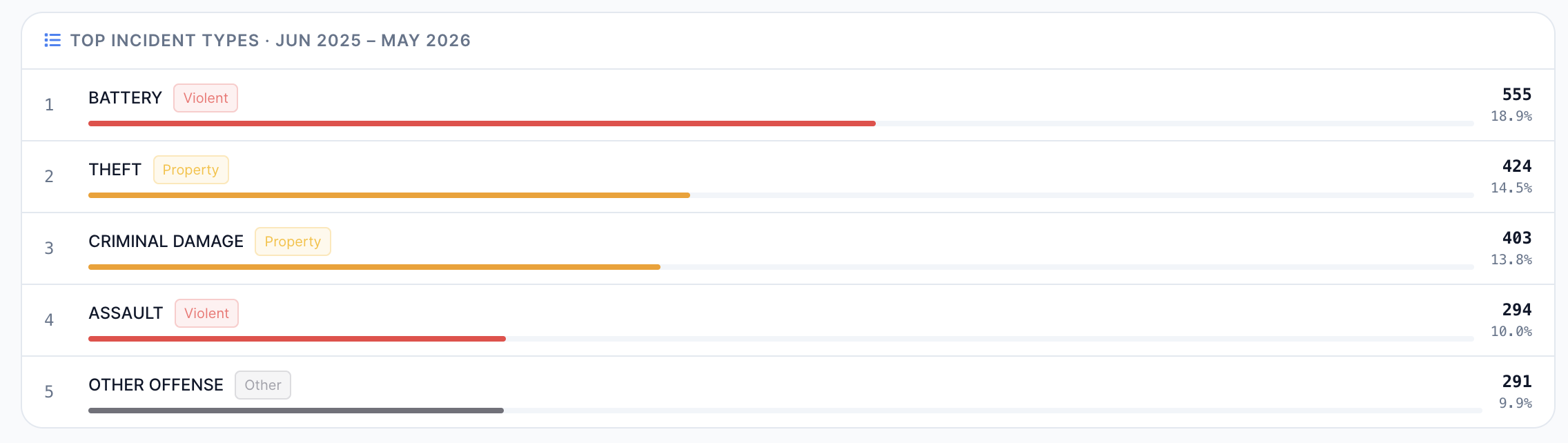
12-month crime trends mapped to the property's quarter-mile radius. Violent vs. property breakdown, trend direction, and the top incident types. The information a careful analyst would pull manually — pre-computed, on every address.
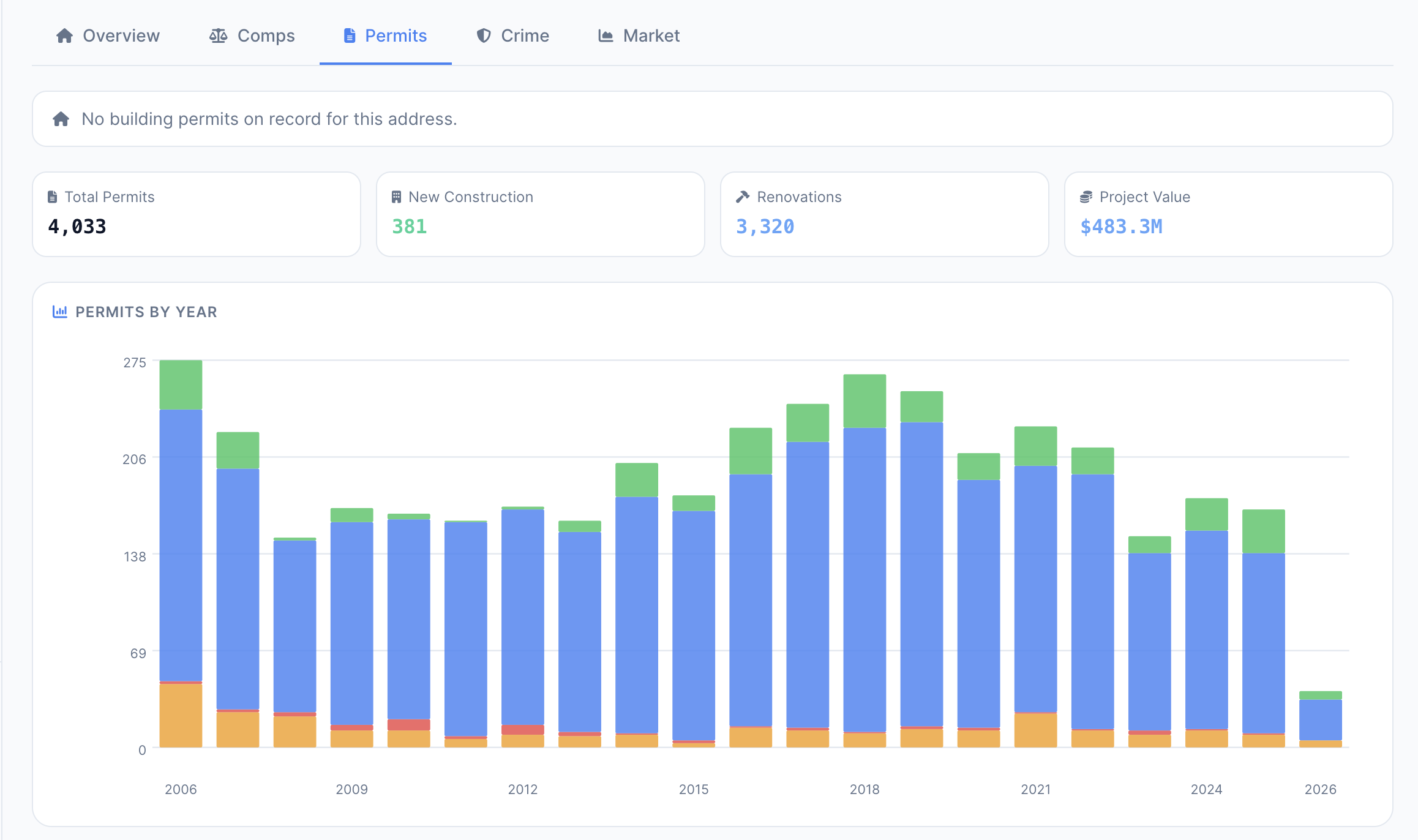
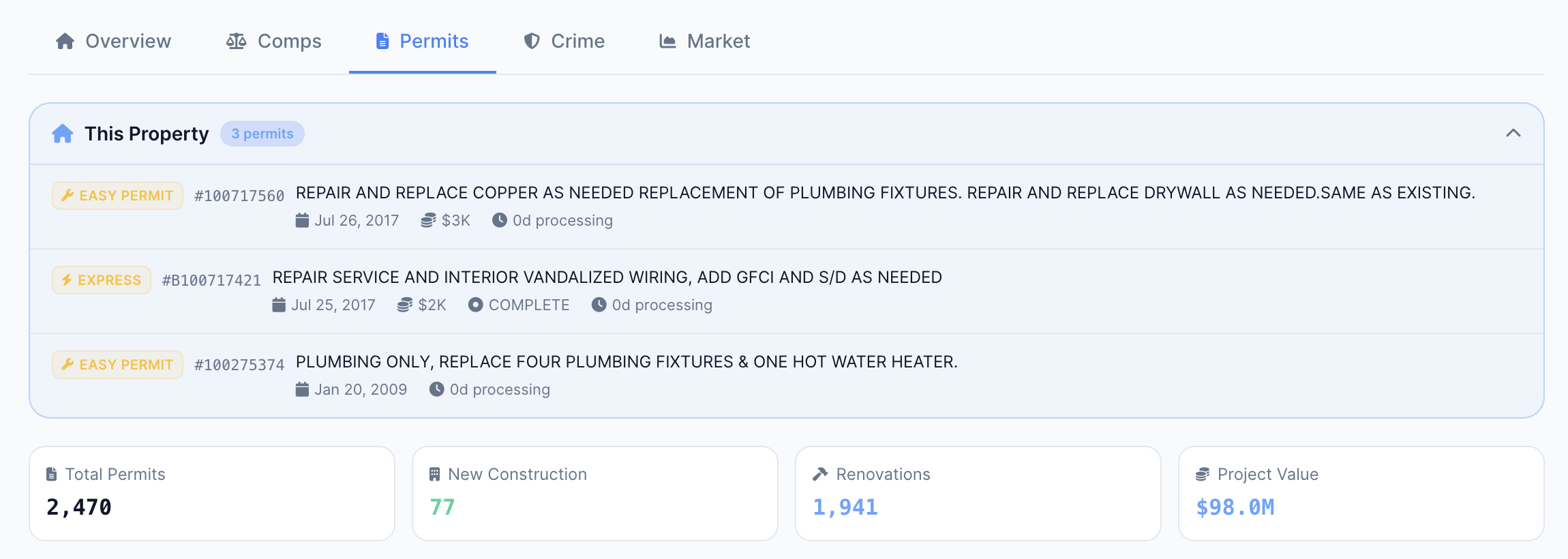
Every permit pulled at the address — plus 1,000+ on the surrounding half-mile. Renovation patterns, new-construction velocity, demolition activity. The signals that tell you whether a neighborhood is on the way up or just being painted that way.
Screen target markets using institutional indicators — vacancy, rent growth, income, supply pipeline.
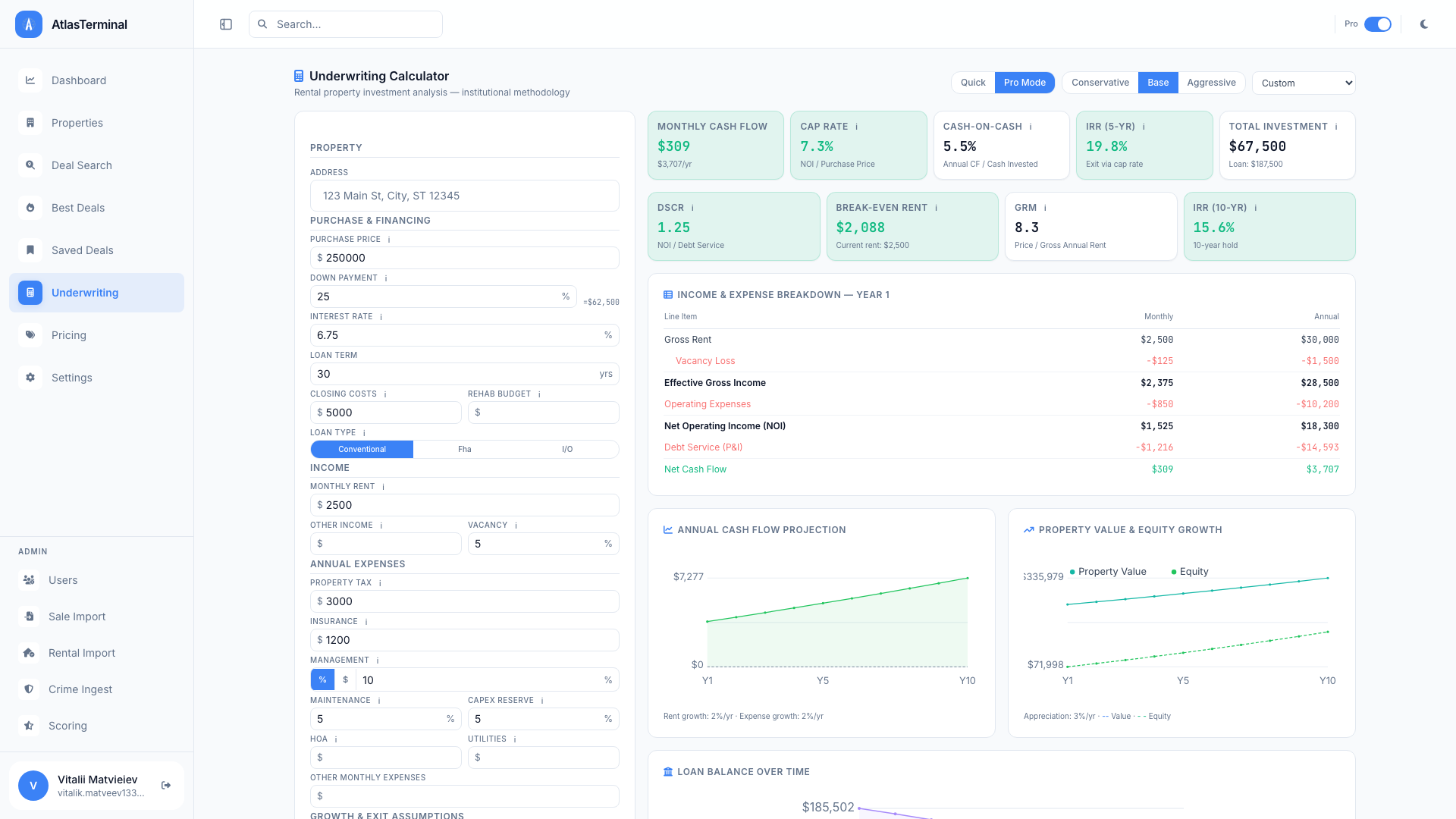
Underwrite each asset with integrated cap-rate benchmarks, NOI modeling, and sensitivity analysis.
Track your portfolio against live market data. Know when a sub-market is shifting before it costs you.
Act with structured, data-grounded analysis — free of the biases spreadsheet workflows embed.
You're doing institutional-quality due diligence on a clock that only keeps ticking. Every week of slower research is a week the competition has the edge.
STR revenue projections need hyperlocal demand, seasonality, and regulatory risk — none of which Airbnb's public tools provide before you commit capital.
At scale, analyst hours are the bottleneck. Compress the research cycle so your team evaluates more deals with the same headcount — without cutting corners.
Until they don't. Spreadsheets can't pull live market data, run scenarios automatically, or alert you when a sub-market is turning against your assumptions. The Phoenix investor with $1,400/month negative cash flow thought the same thing.
Finding a property is not evaluating it. Redfin shows you what's for sale; it doesn't tell you the cap rate trend, vacancy trajectory, or how a deal performs under stress. That's the gap Atlas closes.
The institutional frameworks matter most when the stakes are high and the margin for error is zero. On a $300K–$1M property with limited capital reserves, rigorous underwriting is more critical than it is for a REIT, not less.
One bad acquisition can cost $50K–$100K. The cost of Atlas is the cost of not making that mistake once. The cost of not using it is every deal you didn't move on fast enough — and every deal you moved on wrong.
No. Atlas is an informational tool — data and analytics for your own due diligence. We don't give personalized investment recommendations or manage capital. The decision is always yours.
Long-form analysis on the metrics, frameworks, and market dynamics that drive institutional underwriting. Written for investors who want to think systematically about real estate.
The formula, the four things it leaves out, and how to read cap rate alongside DSCR, yield on cost, and cash-on-cash.
Read the guide → Market analysisThe three forces that drive compression and which ones are durable. A diagnostic framework, not a forecast.
Read the analysis → Risk managementA 1.25 DSCR clears the bank. It does not clear a rate reset, a vacancy spike, or an insurance jump. Stress test the number that matters.
Read the framework → UnderwritingA 50 basis point exit cap miss moves terminal value more than five years of rent growth. The math runs the other way than most pro formas assume.
Read the analysis → MethodologyThe systematic, data-driven discipline behind institutional underwriting — and the parts retail investors can adopt.
Read the playbook → StrategyEvery market moves through predictable phases. Identifying cycle position and adjusting underwriting accordingly is a structural edge.
Read the framework →Professional traders have Bloomberg. Real estate investors have spreadsheets. Atlas closes that gap.
Free during beta · No credit card · 2-minute signup