Part of our complete framework for underwriting a rental property.
A first-time investor runs the numbers on a rental and the cash-on-cash return comes back at about 1%. The deal looks dead — a savings account beats it. But that 1% only counts the cash the property hands back each year. Every month, a second thing is happening that never shows up in the bank account: part of the mortgage payment is quietly shrinking the loan. That slow, automatic paydown is amortization, and it is one of the main reasons people buy rentals with a loan in the first place.
This post explains what amortization is, why early payments are almost all interest, and how to count the equity it builds — using one worked example from start to finish.
What Amortization Means
Amortization is the process of paying off a loan in equal installments over a fixed period, where each payment covers two things: interest — the fee the bank charges for lending the money — and principal — a repayment of the actual loan balance. On a standard 30-year fixed-rate mortgage, the total payment stays the same every month for 30 years, but the split between interest and principal does not.
The word itself helps. To amortize a loan is to “kill it off” on a schedule: make every payment on time and the balance lands on exactly zero in the final month. Nothing is left owed, and nothing extra has to be done.
The two halves behave very differently. Interest is a pure cost — it is gone the moment it is paid. Principal is not a cost in the same sense: it converts a dollar of debt into a dollar of equity, the share of the property the investor actually owns. Watching that conversion happen, payment by payment, is the whole point of understanding amortization.
Why Early Payments Are Almost All Interest
Interest is charged on whatever the investor still owes. At the start of the loan the balance is at its largest, so the interest charge is at its largest too — and very little of the fixed payment is left over for principal.
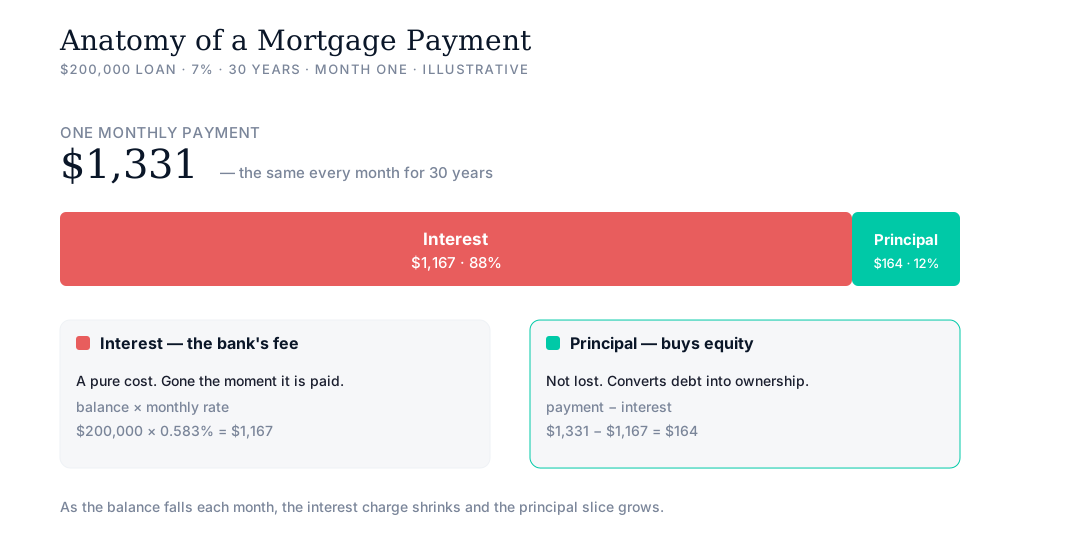
Take a $200,000 loan at a 7% interest rate over 30 years. The payment is a flat $1,331 a month. In month one:
- Interest = $200,000 × (7% ÷ 12) = $1,167
- Principal = $1,331 − $1,167 = $164
Only $164 of that first $1,331 payment — about 12% — actually buys equity. The other 88% is the cost of borrowing.
But each payment shrinks the balance a little, so next month’s interest is charged on slightly less, leaving slightly more for principal. The effect compounds. The interest share falls every month and the principal share rises — slowly at first, then faster near the end.
| Point in the loan | Interest | Principal |
|---|---|---|
| Month 1 | $1,167 (88%) | $164 (12%) |
| Year 15 | $864 (65%) | $467 (35%) |
| Final year | almost none | almost all |
The Equity You Never See in Cash Flow
Here is the part that changes how a deal looks. Cash flow — the money left after debt service — treats the entire mortgage payment as money out the door. But part of that payment did not leave; it moved from the “debt” column to the “equity” column. The investor is, in effect, paying themselves.
Over the first year of the $200,000 loan, about $2,030 of principal is paid down — the balance falls from $200,000 to roughly $197,970. That $2,030 is a real gain on the investment, even though not a single extra dollar of spendable cash appeared. Investors sometimes call this forced savings: the loan structure makes the owner build equity whether they meant to or not.
The catch is that this equity is locked up. It is not cash in hand — the owner cannot spend principal paydown until the property is sold or refinanced. It is a return, but an illiquid one.
A Worked Example: The Hidden Return
Put the two pieces together. An investor buys a $250,000 single-family rental, puts 20% down ($50,000), and borrows $200,000 at 7% over 30 years. After closing costs of about $5,000, the total cash invested is $55,000.
| Line | Amount |
|---|---|
| Net operating income | $16,500 |
| − Annual debt service | −$15,967 |
| Pre-tax cash flow | $533 |
| Cash invested | $55,000 |
| Cash-on-cash return | ≈ 1.0% |
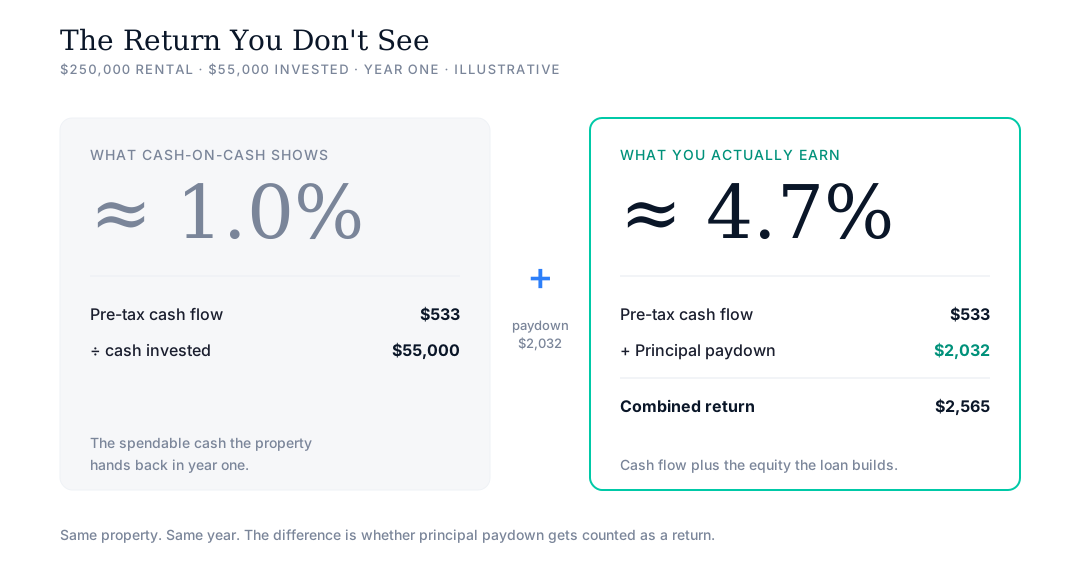
On cash-on-cash return alone, the deal earns about 1% — barely better than nothing. Now add the principal paydown:
| Return component | Year 1 | On $55,000 |
|---|---|---|
| Pre-tax cash flow | $533 | 1.0% |
| Principal paydown | $2,032 | 3.7% |
| Combined first-year return | $2,565 | ≈ 4.7% |
The same deal that looked like a 1% return is actually working at closer to 4.7% in year one once the equity build is counted. Nothing about the property changed — only what the investor remembered to count.
This is not a reason to ignore cash flow. A deal that bleeds cash every month can still be a bad deal even with healthy paydown, because the owner has to fund those losses out of pocket. Paydown is a return; it is just not a spendable one.
What to Do on Your Next Listing
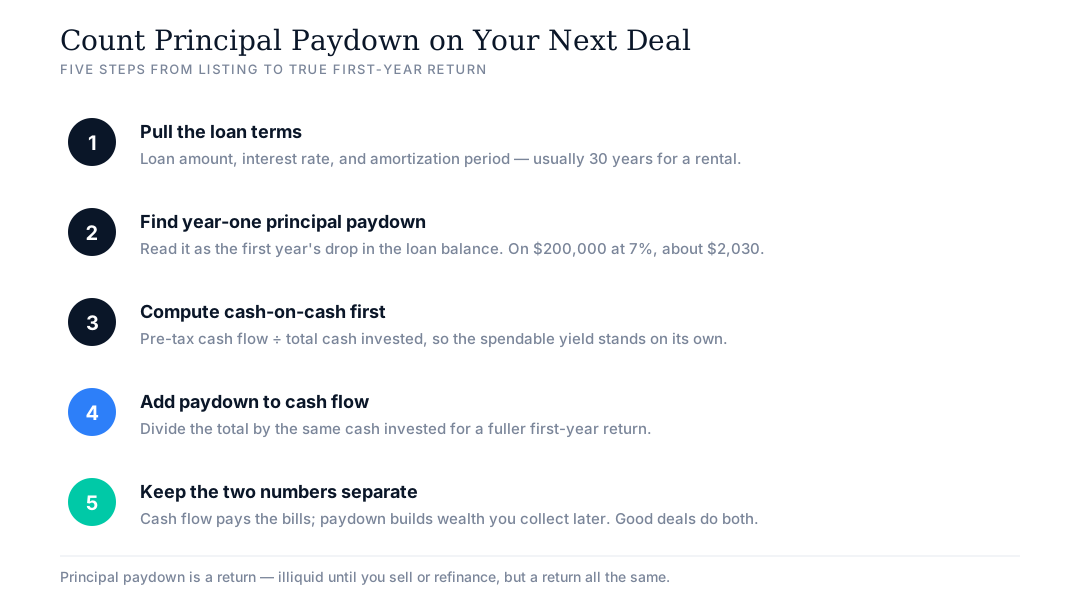
- Pull the loan terms — loan amount, interest rate, and amortization period (usually 30 years for a rental).
- Find year-one principal paydown. Any amortization calculator shows it, or read it as the first year’s drop in the loan balance. On a $200,000 loan at 7%, it is about $2,030.
- Compute cash-on-cash first — pre-tax cash flow ÷ total cash invested — so the spendable yield stands on its own.
- Add principal paydown to cash flow, then divide by the same cash invested. That is a fuller picture of the first-year return.
- Keep the two numbers separate. Cash flow pays the bills; paydown builds wealth you collect later. A good deal usually does both.
Frequently Asked Questions
Is amortization the same as my interest rate?
No. The interest rate sets the price of borrowing; amortization is the schedule that pays the loan off. Two loans at the same 7% rate can amortize over 15 or 30 years, producing very different payments and very different paydown speeds.
Does principal paydown count as income I pay taxes on?
Not as it happens. Building equity through paydown is not taxable income in the year it occurs. The mortgage interest, meanwhile, is generally a deductible expense on a rental. Tax treatment varies, so confirm the specifics with a tax professional.
Why do 15-year loans build equity so much faster?
A shorter amortization period forces more principal into every payment. The monthly payment is higher, but a far larger share goes to principal from day one, so the balance falls much faster — at the cost of thinner monthly cash flow.
What is an interest-only loan, then?
An interest-only loan has no amortization during its interest-only period: every payment is pure interest and the balance does not move. Payments are lower, but no equity is built through paydown, and the full balance still comes due later.
AtlasTerminal breaks every financed deal into its real return components — cash flow and principal paydown, side by side — so the spendable yield and the equity build are never confused for each other. Run the numbers on a listing you are considering and see what the loan is quietly building.