Part of our complete framework for underwriting a rental property.
A listing pops up at $260,000 with $2,200 in monthly rent. A second comes in at $310,000 and $2,400. Before opening a spreadsheet, the first listing already looks cheaper relative to rent — and that intuition has a name. Gross rent multiplier, almost always shortened to GRM, is the simplest screening metric in real estate and the fastest way to compare two listings side by side. It is also the metric most likely to mislead a first-time investor who treats it as a return instead of a screen.
This post walks through what GRM measures, how to compute it on any listing, and the four things it deliberately leaves out — the same way cap rate and cash-on-cash return come with explicit blind spots.
What GRM Measures
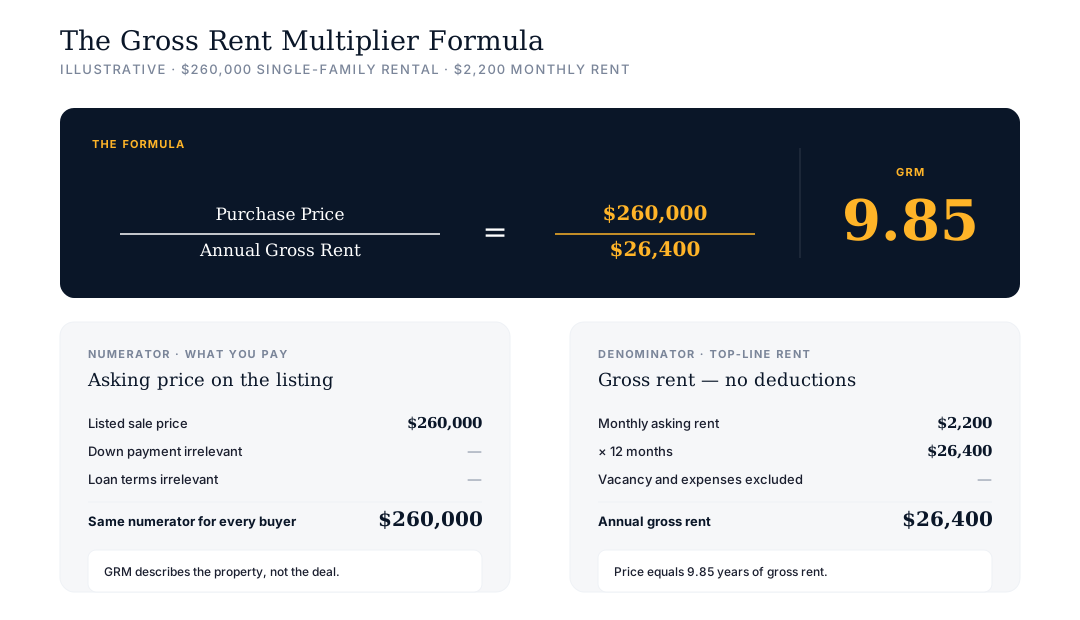
Gross rent multiplier is the purchase price divided by one year of gross rent the property is expected to collect. In one line:
GRM = Purchase Price ÷ Annual Gross Rent
A property priced at $260,000 with $2,200 in monthly rent — that is $26,400 a year — has a GRM of 9.85. Read aloud, the number means the asking price equals roughly 9.85 years of gross rent. That framing matters: GRM is essentially a payback period in rent terms, before any cost is taken out.
The word “gross” is doing real work. GRM uses the top line of the rent roll — total scheduled rent, with no deductions for vacancy, operating expenses, or financing. It is the easiest real estate metric to compute precisely because it ignores nearly everything that turns rent into actual income.
That simplicity is the point. GRM is built for speed: scanning twenty listings on a portal in five minutes and deciding which three are worth a closer look. It is not built to underwrite a deal.

Why a Lower GRM Is Not Automatically Better
The first-time investor reflex is the same one cap rate triggers: a lower number must mean a better deal. It usually does not — for the same two reasons.
A GRM of 6 in a small Midwest town and a GRM of 18 in a coastal metro can both be correctly priced. The market sets GRM by trading current rent yield against two unwritten variables the formula does not show: risk and expected growth. Markets where rents grow reliably and the property is easy to operate trade at higher GRMs because the future is worth more. Markets where rents stagnate, vacancy is sticky, and turnover is expensive trade at lower GRMs because the future is worth less.
This is why experienced investors compare GRM to local comparables, not to a national rule of thumb. A GRM of 12 might be unremarkable in one zip code and aggressive in another two miles away. The right benchmark is always recent sales in the same submarket.
A Worked Example
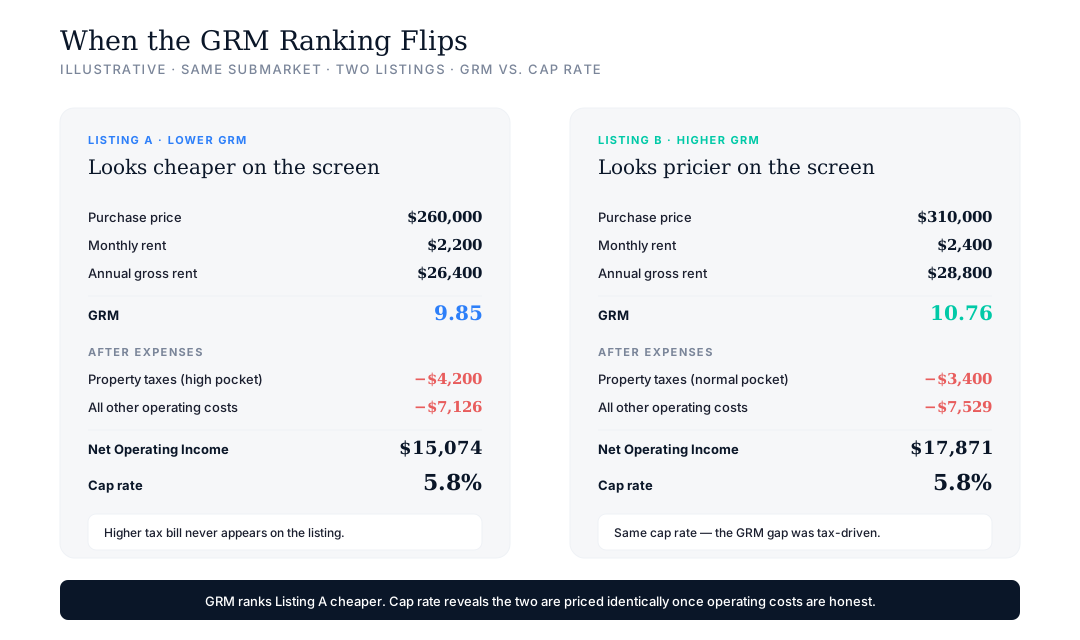
Two listings, same neighborhood.
| Line | Listing A | Listing B |
|---|---|---|
| Purchase price | $260,000 | $310,000 |
| Monthly rent | $2,200 | $2,400 |
| Annual gross rent | $26,400 | $28,800 |
| GRM (Price ÷ Annual Rent) | 9.85 | 10.76 |
On GRM alone, Listing A is the cheaper deal. Now layer the rest of the picture — the same line-by-line approach used in the net operating income walkthrough:
| Line | Listing A | Listing B |
|---|---|---|
| Annual gross rent | $26,400 | $28,800 |
| Vacancy (5%) | −$1,320 | −$1,440 |
| Property taxes | −$4,200 | −$3,400 |
| Insurance | −$1,300 | −$1,400 |
| Management (8% of EGI) | −$2,006 | −$2,189 |
| Maintenance and reserves | −$2,500 | −$2,500 |
| Net Operating Income | $15,074 | $17,871 |
| Cap rate (NOI ÷ Price) | 5.8% | 5.8% |
The two listings land at the same cap rate — even though Listing A looked materially cheaper by GRM. The reason is hidden in the property tax bill: Listing A sits in a higher-tax pocket, which never appears in the gross-rent line. GRM flagged a gap that did not exist. Only NOI explained why.
What GRM Leaves Out
GRM is a screening number. Four things it is deliberately silent on, every one of which can flip the ranking:
Operating expenses. Property taxes, insurance, management, maintenance, and reserves typically eat 35–50% of gross rent. A property with above-average operating costs will look better on GRM than it deserves.
Vacancy and concessions. Asking rent is not collected rent. A unit that sits empty two months a year, or that requires a month of free rent to sign a lease, produces less effective income than the listing suggests.
Financing. GRM ignores the mortgage entirely. Two investors buying the same building with different down payments will see different actual returns — GRM will not move.
Growth. A submarket where rents grow 4% a year is worth more than one where rents are flat, even at the same starting GRM. The metric is a snapshot, not a forecast.
The right way to use GRM is the way brokers use it on a hot day — to quickly drop listings that are clearly mispriced and short-list the ones worth real underwriting.
What to Do on Your Next Listing
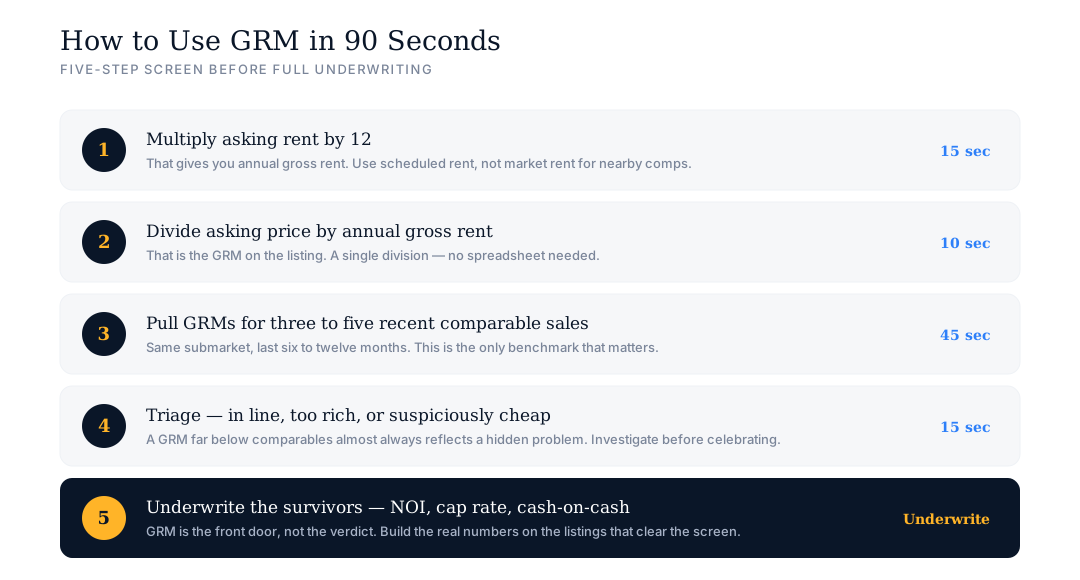
When the next property surfaces, take ninety seconds and run this:
- Multiply asking rent by 12. That is annual gross rent.
- Divide the asking price by annual gross rent. That is the GRM.
- Pull three to five comparable sales in the same submarket from the last six to twelve months and compute the GRM on each. This is the only benchmark that matters.
- Triage. If the GRM is in line with comparables, the listing is worth a deeper look. If it is wildly higher, the price is rich. If it is wildly lower, something is wrong — investigate before celebrating.
- Underwrite the survivors. For each listing that clears the triage, build NOI line by line and compute the cap rate and cash-on-cash return with your actual loan terms.
GRM is the front door of analysis, not the verdict.
Frequently Asked Questions
Is GRM the same as cap rate?
No. GRM uses gross rent — before any costs. Cap rate uses NOI — after operating costs. GRM is a screen; cap rate is closer to a real yield. Two properties with the same GRM can have meaningfully different cap rates depending on how expensive each one is to operate.
Why do some sites quote GRM as a single digit and others as a much higher number?
The standard convention is annual GRM — price divided by annual gross rent — which usually lands somewhere between 5 and 25. A few residential sources use monthly GRM — price divided by monthly rent — which lands between 60 and 300. They describe the same relationship on different time scales. Confirm which version you are looking at before comparing.
Does GRM apply to short-term rentals?
With care. The “gross rent” in the numerator should be projected nightly revenue times occupancy, which is far noisier than a long-term lease. GRMs on short-term rentals are also typically lower than on long-term rentals because operating costs are much higher — cleaning, platform fees, consumables. A short-term-rental GRM read against long-term comparables will mislead.
What is a “good” GRM?
There is no universal answer — only a comparative one. A GRM of 8 is excellent in a coastal metro and unremarkable in a tier-three Midwest market. The right benchmark is always recent comparable sales in the same submarket.
AtlasTerminal builds GRM, cap rate, and cash-on-cash on the same line-by-line analysis — using real tax records, insurance quotes, and recent comparable sales rather than the asking rent on the listing. Run the numbers on a listing you are considering and see how it compares to the submarket.