Part of our complete framework for underwriting a rental property.
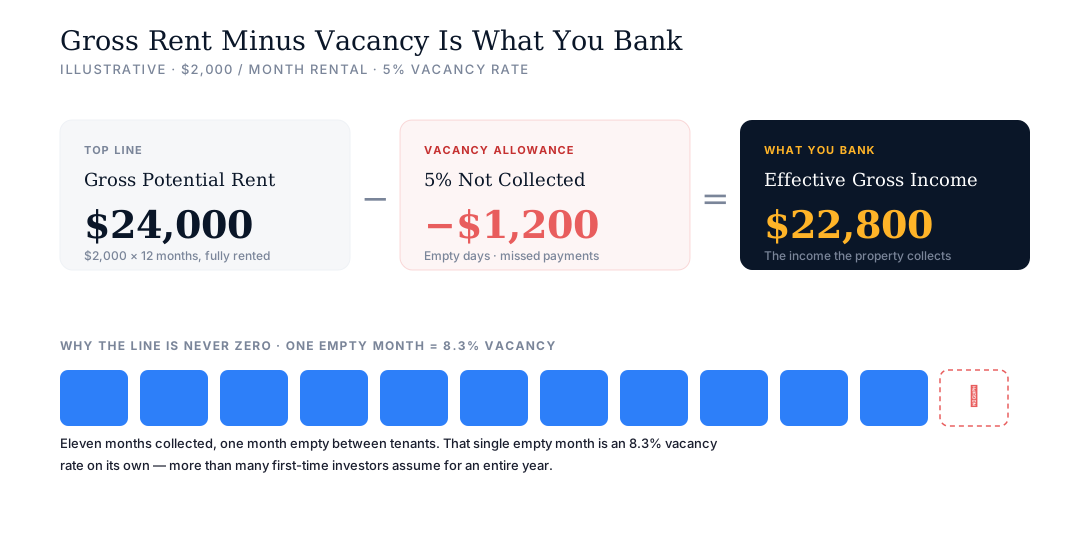
A rental listing quotes $2,000 a month. The natural first move is to multiply by twelve, write down $24,000, and treat that as the property’s income. But no rental collects twelve full months of rent every year. Tenants move out and units sit empty between leases. Now and then a tenant stops paying before they leave. The single line that turns that optimistic $24,000 into a number the property actually banks is the vacancy allowance, and the percentage behind it is the vacancy rate. It is one of the first lines a first-time investor has to stop skipping.
This post explains what the vacancy rate measures, why full occupancy never happens, how to choose a number you can defend, and how much the line moves a deal on a worked example.
What the Vacancy Rate Measures
The vacancy rate is the share of a property’s potential rental income that it fails to collect because units sit empty or rent goes unpaid. It sits near the very top of every rental analysis, one step below the asking rent.
Three terms travel together here. Gross potential rent is what the property would collect if every unit were rented every day of the year at full asking rent — $24,000 in the example above. The vacancy allowance is gross potential rent multiplied by the vacancy rate: the dollars you expect not to collect. Effective gross income, or EGI, is what is left — the income the property realistically banks.
Gross Potential Rent − Vacancy Allowance = Effective Gross Income
There are two flavors of vacancy worth naming. Physical vacancy is time a unit sits empty — no tenant, no rent. Economic vacancy is broader: it counts every dollar of potential rent the property does not actually collect, including rent lost to a non-paying tenant. A beginner can fold both into a single vacancy rate and be in good shape; the distinction matters more as portfolios grow.
For context, the national rental vacancy rate was about 7% in early 2026, per the Census Bureau’s Housing Vacancy Survey. That is a useful sanity check, but it is a national average across every property type and market. The number that belongs in your analysis is the one for your submarket and your kind of property.
Why 100% Occupancy Never Happens
The reason vacancy is a line and not a rounding error comes down to two unavoidable facts of being a landlord.
Turnover. When a tenant moves out, the unit does not re-rent the next morning. It has to be cleaned, often repainted, sometimes repaired, then listed, shown, and the new applicant screened. Two to four weeks of empty time between tenants is normal even for a well-run rental in a healthy market. Turnover is not a sign of a bad property — it is the cost of tenants being human and moving.
Collection loss. Occasionally a tenant stops paying rent before they vacate. The income is gone even though the unit is occupied — which is exactly the economic vacancy described above.
The math is unforgiving once you put numbers on it. One empty month out of twelve is 8.3% vacancy. Two weeks of empty time a year is roughly 4%. So a property that turns over once and sits empty for a single month has already used up more vacancy than many beginners assume for an entire year. Underwriting full occupancy is not optimistic — it is assuming something that has never happened.
How to Choose a Vacancy Assumption
The goal is a number that is neither zero nor a guess. Three ways to ground it, in order of preference:
- The property’s own history. If the seller can show a rent roll or a few years of operating statements, the property’s actual vacancy is the best estimate you will get.
- The submarket. Pull a local vacancy figure from the Census American Community Survey, a market-data provider, or simply ask a local property manager what they run. Use it as your floor.
- A sensible default. With nothing better, 5% is a reasonable starting point for a stable rental in a healthy market, and 8–10% is more honest for a higher-turnover unit, a softer market, or a lower-quality property.
One adjustment matters enormously for first-time investors: a single-family rental has no cushion. When a fourplex loses one tenant, three units keep paying. When a single-family home goes vacant, income drops to zero. A vacant house is 100% vacant. That concentration is a real risk, and it argues for a more conservative vacancy assumption on a one-unit rental, not a thinner one.
A Worked Example
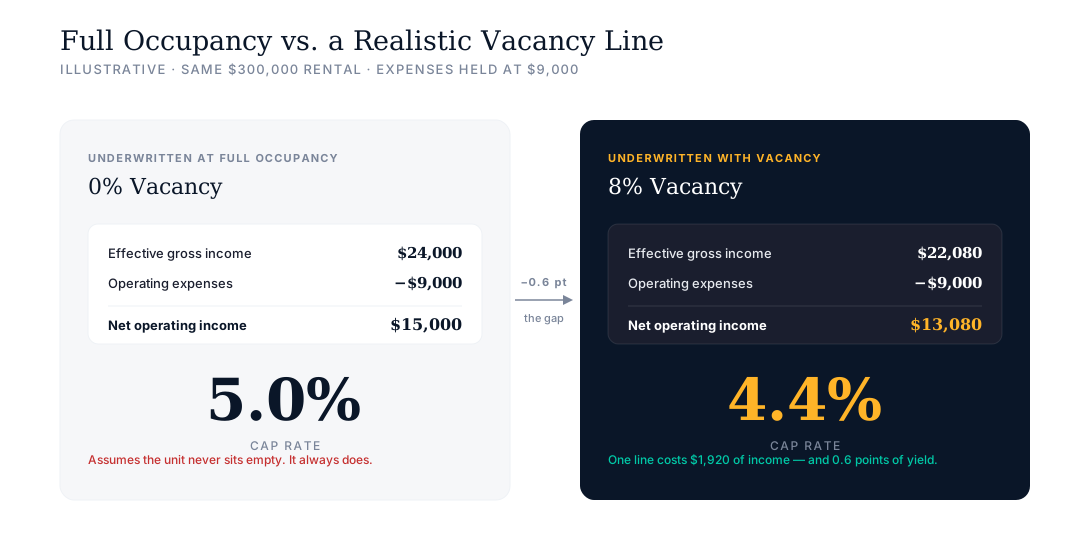
Take the $2,000-a-month rental, priced at $300,000, and hold operating expenses fixed at $9,000 a year so the vacancy line is the only thing that moves.
| Line | Full occupancy | 5% vacancy | 8% vacancy |
|---|---|---|---|
| Gross potential rent | $24,000 | $24,000 | $24,000 |
| Vacancy allowance | $0 | −$1,200 | −$1,920 |
| Effective gross income | $24,000 | $22,800 | $22,080 |
| Operating expenses | −$9,000 | −$9,000 | −$9,000 |
| Net operating income | $15,000 | $13,800 | $13,080 |
| Cap rate (NOI ÷ price) | 5.0% | 4.6% | 4.4% |
The vacancy line alone moves the cap rate from 5.0% down to 4.4% — more than half a point — without changing a single thing about the building. The $1,920 gap between full occupancy and a realistic 8% is real money that the full-occupancy version of the analysis quietly pretends the owner keeps. Multiply that across a hold period and it is the difference between a deal that pencils and one that does not.
What to Do on Your Next Listing
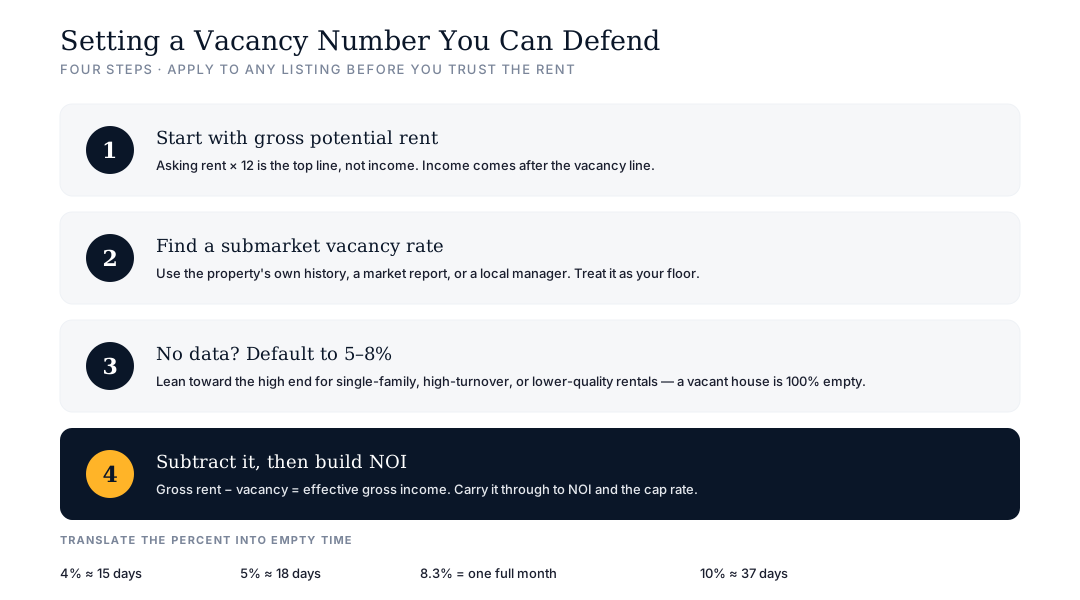
When the next property surfaces, work the vacancy line deliberately:
- Start with gross potential rent, not income. Asking rent times twelve is the top line, not the bottom line.
- Find a submarket vacancy rate — from the property’s history, a market report, or a local manager — and use it as your floor.
- If you cannot find one, default to 5–8%, and lean toward the higher end for single-family, high-turnover, or lower-quality rentals.
- Translate the percentage into months so it feels real: 8.3% is one empty month, 4% is about two weeks.
- Subtract the vacancy allowance to get effective gross income, then build net operating income and the cap rate from there.
Do this once and the habit sticks. The investors who lose money on paper-good deals are usually the ones who never put a vacancy line in at all.
Frequently Asked Questions
Is the vacancy rate the same as the occupancy rate?
They are two sides of the same number. Occupancy rate plus vacancy rate equals 100%. A property running 7% vacancy is 93% occupied. Listings and property managers tend to quote occupancy because the larger number sounds better; underwriting uses vacancy because it is the dollars you subtract.
What is the difference between physical and economic vacancy?
Physical vacancy is time a unit sits empty with no tenant. Economic vacancy is every dollar of potential rent you do not collect, including rent lost to a tenant who stops paying or to a concession like a free month. Economic vacancy is always at least as large as physical vacancy, and it is the more honest figure for underwriting.
Should I just use the national 7% vacancy rate?
Only as a sanity check. The national rate blends every market, property type, and price point in the country. A tight coastal submarket might run 3%, while a soft Sun Belt market with heavy new supply might run 10% or more. Use a submarket figure when you can find one, and treat the national number as a reference point, not an input.
Does vacancy apply to short-term rentals?
Yes, but it works differently and runs much higher. A short-term rental’s equivalent of vacancy is non-occupancy — the nights it sits empty — and even strong vacation rentals are often booked only 50–70% of available nights. The principle is identical: never underwrite a property as if it will be full every day.
AtlasTerminal sets vacancy from submarket data and a property’s actual operating history — not from a hopeful round number — and carries that line straight through to NOI, cap rate, and cash flow. Run the numbers on a property you are considering and see what it earns once vacancy is in.