Part of our complete framework for underwriting a rental property.
A listing surfaces at $300,000 with $2,000 a month in rent. The beginner instinct multiplies rent by 12, subtracts the mortgage, and calls the difference profit. That math overstates the deal by thousands of dollars every year — because it skips the entire category of operating costs that quietly eats into rent. Long before spreadsheets, experienced investors used a single shortcut to keep that instinct in check. It is called the 50% rule, and it is the fastest sanity check a beginner can apply to any rental listing.
This post walks through what the 50% rule actually says, how to apply it on a real listing, and where it leans too generous or too harsh. By the end, the reader should be able to look at any property and produce a rough cap rate in under a minute — without trusting anything the listing claims.
What the 50% Rule Actually Says
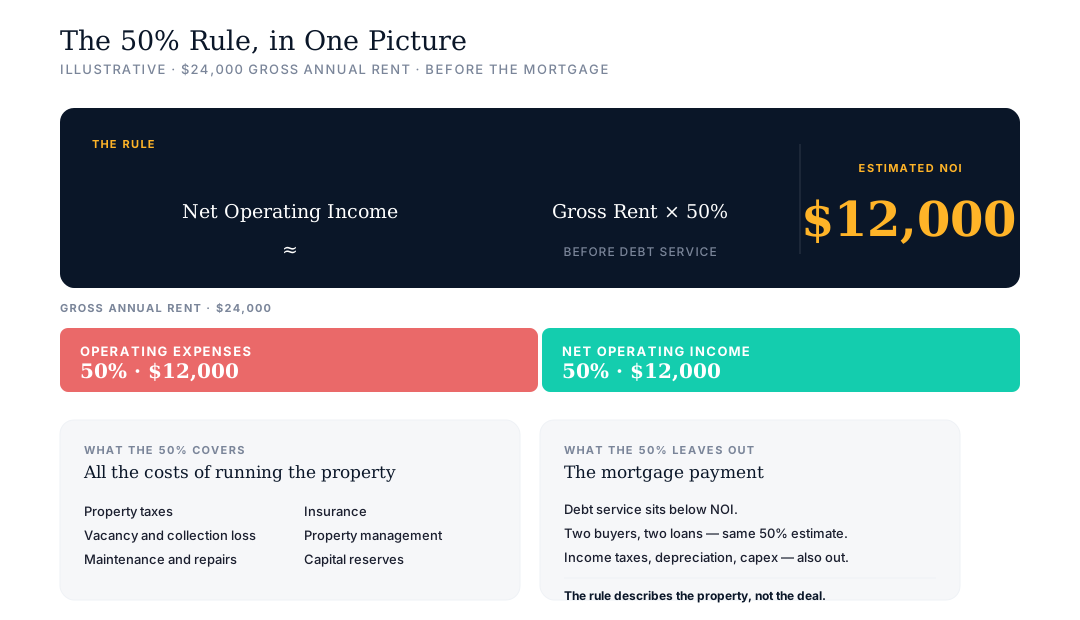
The 50% rule is a rough heuristic that says, over a full year, roughly 50% of a rental property’s gross rental income is consumed by operating expenses. The other 50% is left as net operating income — what is left before the mortgage payment.
In one line:
NOI ≈ Gross Rent × 50%
The half that disappears is not one line — it is the bundle of normal operating costs that every rental incurs:
- Property taxes
- Insurance
- Vacancy and collection loss
- Property management
- Maintenance and repairs
- Capital reserves for big-ticket items
What the rule deliberately leaves out is the mortgage payment. The 50% rule operates entirely above debt service. A property with a small loan and a property with a large loan on the same building will produce the same 50%-rule estimate. The mortgage belongs to the buyer, not the property.
That separation is the same one cap rate and NOI rely on, and it is the reason the 50% rule is genuinely useful as a screen: two investors can look at the same listing and instantly agree on the property-level number, even if their financing differs.

A Worked Example
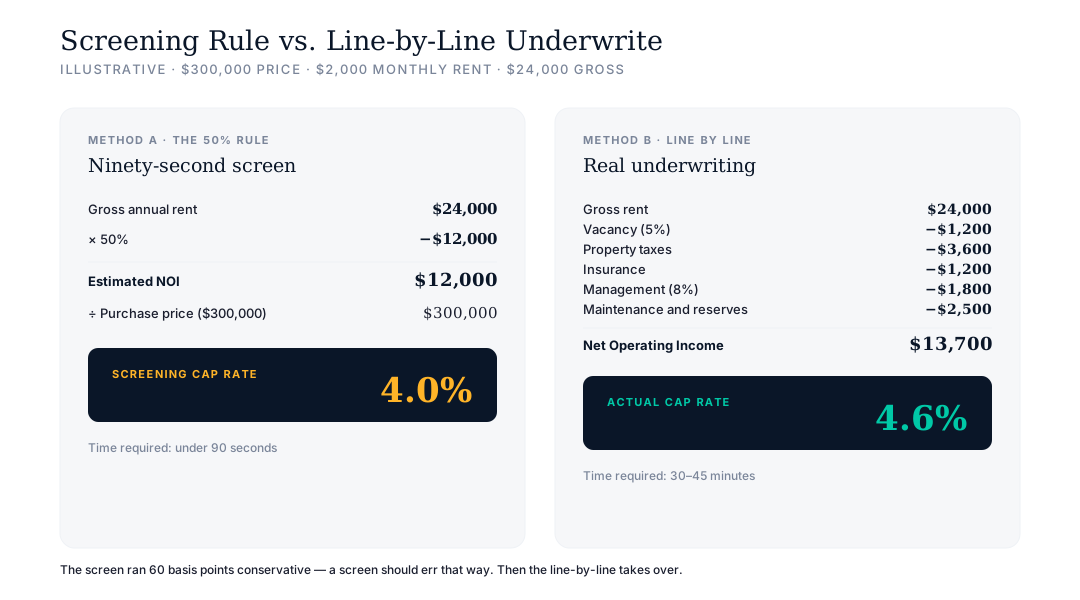
A single-family rental is listed at $300,000 with $2,000 in monthly rent. Run the 50% rule first.
| Line | Amount |
|---|---|
| Monthly rent | $2,000 |
| × 12 months | $24,000 |
| Gross annual rent | $24,000 |
| Operating expenses (50% of gross) | −$12,000 |
| Estimated NOI | $12,000 |
| Purchase price | $300,000 |
| Estimated cap rate (NOI ÷ Price) | 4.0% |
Now compare that to a full, line-by-line build using realistic numbers for a stable secondary market:
| Line | Amount |
|---|---|
| Gross rent | $24,000 |
| Vacancy (5%) | −$1,200 |
| Property taxes | −$3,600 |
| Insurance | −$1,200 |
| Management (8% of EGI) | −$1,800 |
| Maintenance and reserves | −$2,500 |
| Total operating expenses | −$10,300 |
| NOI | $13,700 |
| Cap rate | 4.6% |
The 50% rule estimated a cap rate of 4.0%. The line-by-line build produced 4.6%. The rule of thumb came in slightly conservative — which is exactly what a screen should do. It said “if this listing is going to work, it has to clear at least a 4% cap before I open a spreadsheet.” If the listing’s likely cap rate after that screen looks too low to interest you, you stop here. If it survives, you build the real numbers.
Where the 50% Rule Bends
The half-and-half split is a long-run average across a wide population of small rentals. Any individual property can diverge meaningfully — and the same rule that protects a beginner from one mistake can hide a different one. Three places it bends most often:
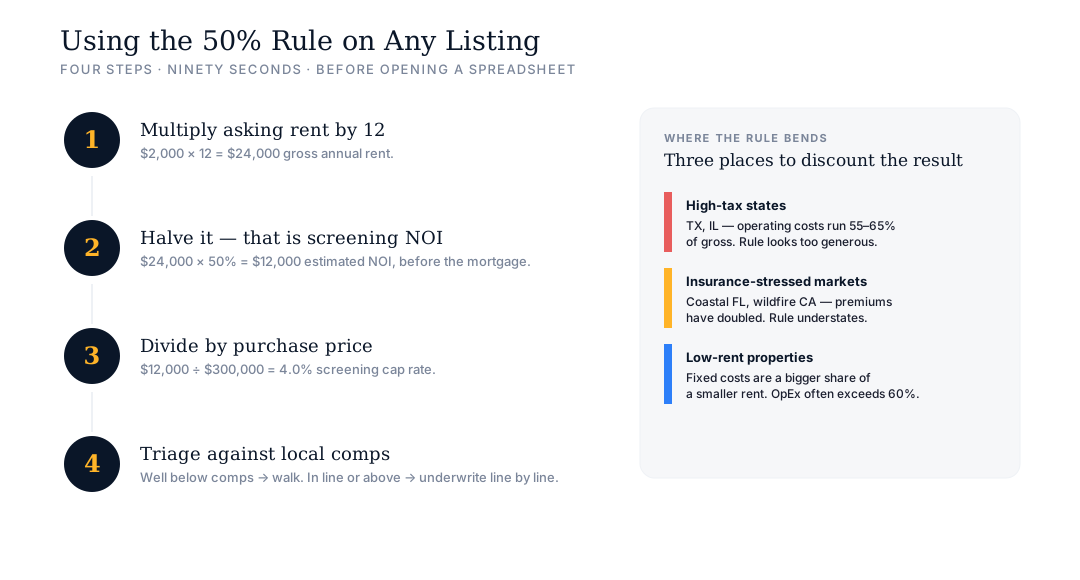
Property taxes. A property in Texas or Illinois can pay an effective tax rate four or five times what an identical property in Alabama pays. On a high-tax property, operating costs can run 55–65% of gross rent — and the 50% rule will make the deal look better than it really is.
Insurance. Coastal Florida, wildfire-exposed California, and certain hail-prone parts of the Plains have seen multifamily and single-family insurance premiums double or triple over the last several years. In those markets, the 50% rule understates expenses by a wide margin.
Rent level relative to fixed costs. A $700-a-month rental in a low-rent market pays roughly the same insurance and management fee in dollars as a $2,000-a-month rental in a stronger market. The lower the rent, the larger fixed costs loom — operating costs can easily exceed 60% of gross rent on the low end. Conversely, a $3,500-a-month rental in a strong market often runs below 50% in operating costs, because fixed costs are a smaller share of a bigger pie.
The rule was built from data on stabilized, moderately priced small multifamily in average tax markets. The further a property sits from that profile, the further the rule drifts.
What to Do on Your Next Listing
When the next property surfaces, take ninety seconds and run this:
- Pull the asking rent and multiply by 12. That is gross annual rent.
- Halve it. That is your screening NOI.
- Divide by asking price. That is your screening cap rate.
- Triage. If the screening cap rate is well below comparable cap rates in the same submarket, the listing is priced too rich — move on. If it survives, the listing is worth a real look.
- Underwrite the survivors line by line. Pull the actual property tax bill from the county website, get a real insurance quote, set vacancy by submarket, and build net operating income the long way. Then layer in your loan terms to get cap rate, debt service coverage, and cash-on-cash return.
The 50% rule is the front door of analysis — not the verdict. Used as a screen, it saves hours. Used as a conclusion, it produces overconfident underwriting.
Frequently Asked Questions
Does the 50% rule include the mortgage?
No. The 50% rule is entirely above the mortgage payment. The 50% covers operating expenses — taxes, insurance, vacancy, management, maintenance, and reserves. The mortgage is debt service, which is a separate line subtracted from NOI to get cash flow. Folding the mortgage into the 50% would mix property economics with financing economics and produce a number that does not compare across buyers.
Is the 50% rule the same as the 1% rule?
No. The 1% rule is a price heuristic — it says monthly rent should be at least 1% of purchase price. The 50% rule is an expense heuristic — it says operating costs run roughly half of gross rent. They look at different sides of the deal and are sometimes used together as a quick double-check before any spreadsheet work.
Does the 50% rule work for short-term rentals?
Not well. Short-term rentals carry materially higher operating costs — cleaning, platform fees, consumables, more frequent turnovers, and higher utility and maintenance loads. Operating expense ratios on short-term rentals frequently exceed 60–70% of gross revenue. Applying the 50% rule to a vacation rental will systematically overstate income.
Where does the 50% number come from?
From decades of operator data on small residential rentals. It is not a regulatory or accounting standard — just a long-run average that holds up reasonably well for stabilized two-to-four-unit and small multifamily properties in average tax and insurance markets. It was useful enough as a back-of-envelope rule that it persists today, even with full underwriting software a click away.
AtlasTerminal builds operating expenses line by line from real tax records, current insurance quotes, and recent maintenance benchmarks — no rules of thumb. Run the numbers on a property you are considering and see how close the 50% rule actually came on the deal in front of you.